
Important Note:This article is for general information and educational purposes only — not legal advice. It draws on the High Court’s oral decision in Noraseela binti Mohd Khalid v Badan Pengurusan Bersama Shang Villa [2026] (Case No: BA-24NCvC-211-01/2026), delivered on 30 October 2026 by Judge Datuk Anita Harun, on reports by the New Straits Times, Free Malaysia Today, The Edge, The Star, and a case summary published by Shahrizan & Co. Statements about the court’s reasoning are attributed accordingly.
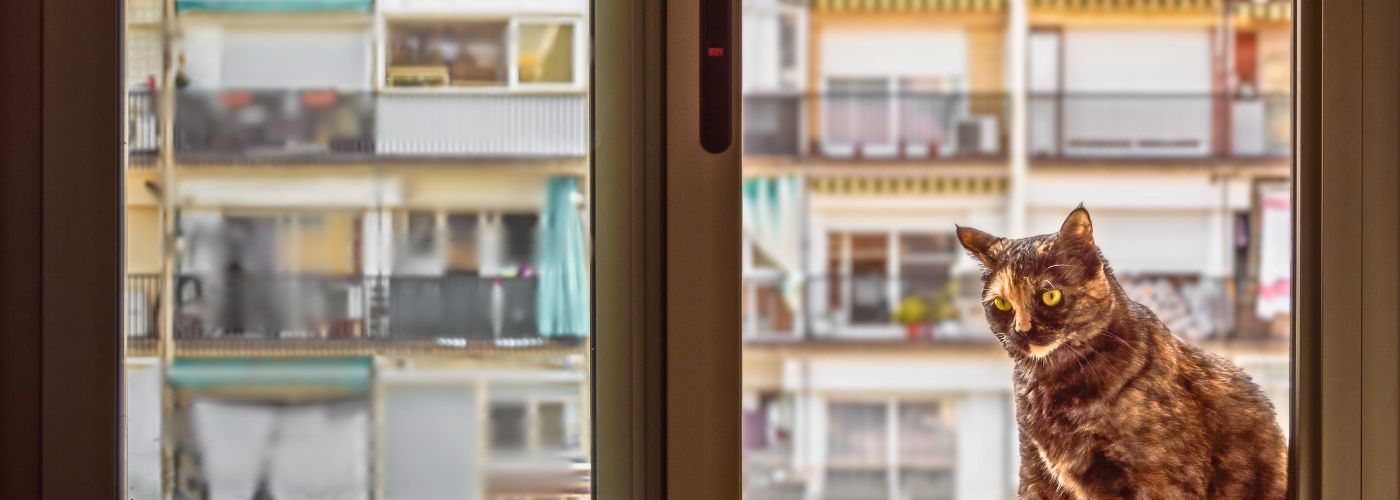
For illustration only
What a High Court ruling on a condominium pet ban says about house rules and statutory by-laws
Noraseela Mohd Khalid kept three cats in her condominium unit at Shang Villa. The joint management body (JMB) took the position that its house rules prohibited this. The dispute escalated beyond a disagreement over rules: the JMB issued her warnings, penalties, and fines for “unauthorised keeping of pets.” When she refused to pay, the JMB allegedly blocked her access to her own unit from 19 January.
She brought an originating summons against the JMB, and the High Court largely sided with her.
The case matters beyond cats. It clarifies a question that arises in strata developments across Malaysia: how far can a management body go in using its house rules to prohibit something, when the governing legislation only provides a narrower power to regulate?
The Rule and the Arguments
Noraseela, 47, kept three vaccinated cats indoors. She argued they had never caused nuisance, danger, or disturbance to other residents. She challenged House Rule 9.0, which the JMB had introduced to restrict residents from keeping pets.
Her core argument was that the rule was ultra vires (beyond the powers of) Sections 70 and 150 of the Strata Management Act 2013. She contended that the Act did not empower the JMB to impose a total blanket ban, but only to regulate pet ownership subject to reasonable conditions.
The JMB maintained that it had the power to regulate and control the keeping of pets, that residents had approved House Rule 9.0 at a general meeting, and that genuine complaints about animals supported the rule.
What the Court Decided
The High Court, sitting in Shah Alam before Justice Anita Harun, allowed the application in part.
The court did not strike down House Rule 9.0 in its entirety. Instead, it drew a crucial distinction between the text of the rule and the way it was enforced.
-
The Conditional Rule is Valid.
House Rule 9.0 begins by referring to animals that “may cause annoyance or disturbance to other occupants.” The court held that this conditional opening sentence could operate consistently with By-law 14 of the Strata Management (Maintenance and Management) Regulations 2015. It was not invalid.
-
The Unconditional Enforcement is Invalid.
What the court rejected was the JMB’s actual enforcement. The JMB’s notices treated the mere presence of the cats in Noraseela’s private unit as a breach in itself, and demanded their removal without identifying a specific nuisance, danger, or prohibited circumstance involving those cats.
The court held that this unconditional approach was unenforceable. General complaints about animals in the development could not simply be attributed to Noraseela’s three cats. A neighbour’s evidence supported her account that the cats were properly cared for, and veterinary certificates supported their apparent good health.
-
The Removal and Liability Clauses are Invalid.
House Rule 9.0 also contained provisions allowing the JMB to remove animals from the common property without notifying their owners, and purported to exclude the JMB from any liability for loss resulting from that removal.
The court declared these clauses invalid and unenforceable. By-law 14 provides specific statutory safeguards: it requires a written notice giving a proprietor in breach three days to remove the animal, and limits the management body’s protection from liability only to damage reasonably caused during that process. House rules cannot be used to bypass these statutory safeguards.
What the Court Did Not Decide
Because this was an oral decision on a specific set of facts, the limits of the ruling are just as important as the findings.
-
There is no free-standing right to keep pets.
The court did not grant owners an unrestricted right to keep any animal in any circumstances. The JMB retains the ability to regulate lawfully, and to act on evidence of nuisance, danger, or a breach of applicable law.
-
The constitutional arguments were left open.
Noraseela argued that the rule violated Article 8 (equality and proportionality) and Article 13 (protection of property) of the Federal Constitution. The court found it unnecessary to decide these constitutional questions and made no ruling on them.
-
The AGM resolution was not invalidated.
A late argument was raised that proper notice of the AGM resolution (which approved the house rule) had not been given. The court found this was not sufficiently raised or proved, and did not invalidate the meeting on that ground.
The Statutory Framework
The case turns on the relationship between two instruments: the prescribed by-laws (made under the Act) and the house rules (made by the JMB itself).
| Provision | What it establishes |
|---|---|
| Section 70(2) | Prohibits house rules that are inconsistent with the Act. |
| Section 150 | Does not empower the JMB to impose a blanket ban on pets; it only empowers the JMB to regulate their keeping. |
| By-law 14(1) | Permits action against a particular animal that may cause nuisance, endanger safety/health, or contravene written law. |
| By-law 14(2) | Requires a written notice giving the owner 3 days to remove the animal before the management body may act. |
In plain terms, By-law 14(1) allows residents to keep pets in their private parcels, provided the animal does not cause annoyance or nuisance to other proprietors, does not cause danger to the safety or health of others, and does not contravene any written law or local authority rules.
If an animal breaches one of those three conditions, By-law 14(2) requires the management body to issue a written notice giving the proprietor three days to remove the animal. Only if the proprietor fails to do so may the management body take action to remove the animal, and charge the costs to the proprietor.
The problem for the JMB in this case was that it did not follow this framework. Instead of proving that Noraseela’s cats had triggered one of the three conditions in By-law 14(1), the JMB used its own House Rule 9.0 to treat the mere presence of the cats as a breach, and issued penalties without the statutory 3-day notice.
Counsel for Noraseela summarised the broader principle: “A JMB is not above the law. House rules cannot be used to circumvent statutory safeguards or to create powers the legislation does not confer.”
Counsel for Noraseela summarised the broader principle:
“A JMB is not above the law. House rules cannot be used to circumvent statutory safeguards or to create powers the legislation does not confer.”
Preventive Action Still Requires Evidence
The court accepted that the word “may” in By-law 14 permits preventive action. Management does not have to wait until harm actually occurs.
However, the court made clear that prevention requires a factual basis. Management must be able to point to facts about the particular animal and the risk it poses. It cannot act on the mere assumption that every pet is a nuisance, nor can a building-wide history of complaints replace evidence specific to the owner in question.
Practical Takeaways
For Residents
If your management body relies on a house rule to prohibit pets outright, this case suggests three questions to ask:
- Is the JMB relying on a conditional rule (animals that cause a disturbance) or applying an unconditional ban (pets are prohibited)?
- If enforcement is being taken, what evidence links your specific animal to a nuisance, danger, or prohibited circumstance?
- If the JMB is threatening removal, have they issued the formal 3-day written notice required under By-law 14(2)?
For Management Bodies
The case does not prevent action against irresponsible pet ownership. It requires that action be evidenced and procedurally correct.
If a genuine complaint arises, the practical sequence for a JMB is:
- Record the specific complaint.
- Identify the particular animal and the circumstances.
- Assess which condition in By-law 14(1) is engaged (nuisance, danger, or breach of law).
- Issue the written notice required by By-law 14(2).
- Only take removal action if the notice is not complied with.
A Closing Thought
The dispute is a small one: three cats in a condominium unit. But it escalated into fines, penalties, and an alleged loss of access to a private home.
The court’s answer, as reported, is that the law regulates conduct — not the mere keeping of an animal. A management body can act to prevent genuine nuisance, but it must act on evidence, not assumption. The preference of a majority at an AGM does not, in itself, authorise a JMB to disregard the statutory safeguards Parliament put in place for individual proprietors.