Important Note: This article is for general information and educational purposes only—not legal advice. It draws on the Federal Court’s oral judgment delivered on 16 June 2026 as reported by Bernama, The Edge, and Free Malaysia Today, and the Court of Appeal’s written grounds in Agrobest (M) Sdn Bhd & Ors v Rosli a/l Jendut & Ors [2025] MLJU 2750.
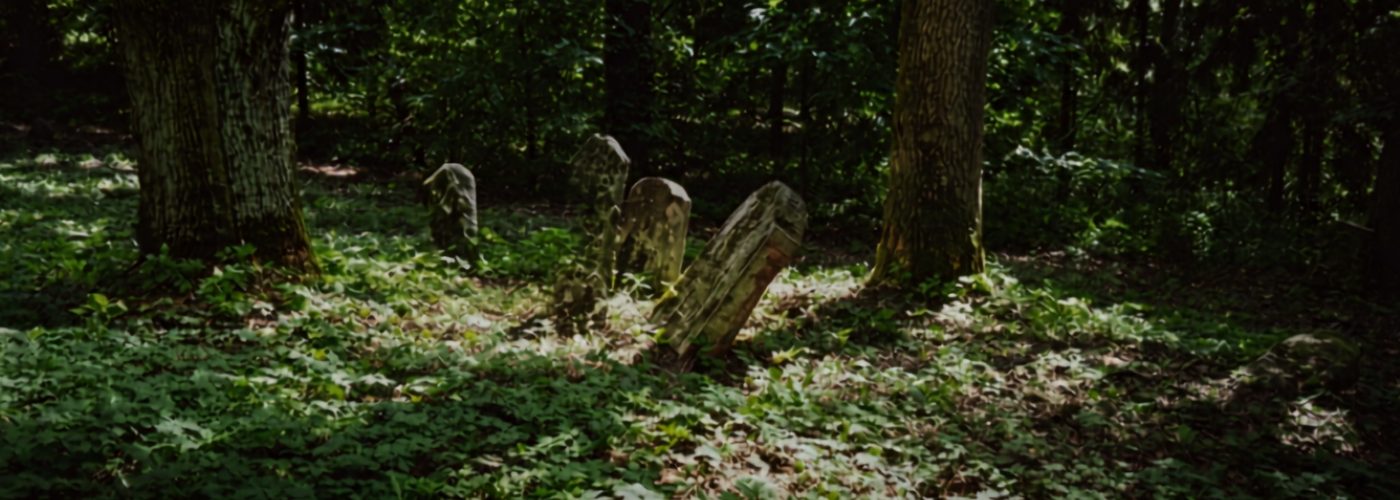
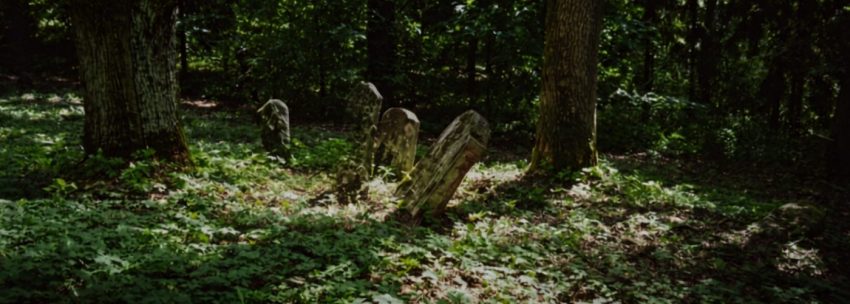
For illustration only
What a Federal Court Decision Means for Indigenous Rights and Corporate Conduct
“It was more a case of their impatience in commencing work of developing the area into the biggest aquaculture park in Asia, as stated in their apology letter to the plaintiffs, that they had commenced the clearing works including clearing away the cemeteries and tombstones.” Those words, delivered by Federal Court Justice Datuk Lee Swee Seng on 16 June 2026, cut to the heart of a dispute that had travelled through three tiers of the Malaysian court system. Seven Orang Asli villagers from Pekan, Pahang, had spent seven years seeking justice for something irreplaceable: the graves of their ancestors, destroyed by bulldozers to make way for prawn ponds.
On that Tuesday in June, the Federal Court unanimously ruled in their favour. Each villager was awarded RM20,000 in general damages. The sum was not extraordinary. The principle was.
The Background: A Village, a Lease, and an Aquaculture Dream
The seven villagers — Rosli Jedut, Atan Baro, Melah Hamid, Awang Bako, Esah Wir, Kasim Awang, and Majib Kasim — are Orang Asli from Kampung Orang Asli Batu 20, Mukim Bebar, in Pahang’s Pekan district. For generations, their community had lived on the land, and for generations, they had buried their dead there. The burial site held the remains of parents, siblings, children, and grandparents, marked by tombstones that carried no names — only memory.
That changed in 1999. The Orang Asli Development Department (JAKOA) instructed the community to vacate the area to make way for development. The villagers relocated to Kampung Landai. They received no compensation for the move. But they did not abandon their dead. Every year, they returned to the burial site to perform customary rituals. They came when premonitions in their dreams called them back.
In 2017, the Pahang State Secretariat Corporation (Perbadanan Setiausaha Kerajaan Negeri Pahang) (PSK) entered into a 30-year lease agreement with ABSF International Group (M) Sdn Bhd to develop 700 acres of the land for sea prawn pond farming. Agrobest (M) Sdn Bhd, a wholly-owned subsidiary of ABSF, was appointed to carry out the development. The land was legally leased. The company had paid for its rights. But what lay beneath the soil did not feature in the contract.
The Excavation
On 31 December 2017, backhoe contractor Khong Chung Chong engaged by Agrobest began excavation work at the burial site. According to the company, it had made efforts to communicate with the native community and relevant authorities to relocate the graves. It had approached Tok Batin Rahim, the Batin of Kampung Landai, who had conveyed the company’s intention to one of the villagers. There was no response. The company, citing the need to proceed with development and confirmation from Tok Batin Rahim, commenced work.
What happened next was disputed. The High Court later found that the backhoe operator had acted in a manner that showed a lack of respect for Orang Asli customs and traditions. The burial site was roughly disturbed. The company would later write an apology letter to the villagers, admitting that it had commenced clearing works — including clearing away the cemeteries and tombstones — to make way for what it envisioned as the biggest aquaculture park in Asia.
The villagers lodged around 20 police reports. Then, in February 2019, they filed a lawsuit.
The High Court: A Finding of Fact
On 11 July 2023, the Kuantan High Court ruled in favour of the villagers. The court found that the villagers had successfully proven their claim. The company knew the burial site existed. It had engaged the contractor to carry out excavation works there. The manner in which the backhoe was used showed a disregard for indigenous customs. The act constituted a “kacau ganggu” — a disturbance — against the burial site.
Crucially, the High Court found that Tok Batin Rahim, who was present in court, did not represent the villagers. They had never given him consent to negotiate on their behalf. They were never informed that the burial site would be relocated, nor did they agree to it.
The High Court awarded each villager RM20,000 in general damages, with costs of RM20,000. Claims for special damages, aggravated damages, exemplary damages, and emotional distress were dismissed.
The Court of Appeal: Overturned on Standing
Agrobest appealed. On 22 October 2024, the Court of Appeal allowed the appeal and set aside the High Court’s decision. The Court of Appeal’s reasoning rested on two main grounds.
First, the villagers lacked legal standing — locus standi — to bring the action. The court found that the villagers had failed to produce sufficient evidence to prove they were descendants of those buried at the site. They could not produce death certificates. The tombstones were unnamed. Without proof of identity, the court held, any person could assert that the graves belonged to their relatives.
Second, the court found that the company was not a trespasser. The villagers had moved out of the land in 1999 under JAKOA’s instruction. They no longer had possession or control of the land. The company had lawfully obtained approval to possess and develop it. Without possession, there could be no trespass. Without trespass, there could be no duty of care.
The villagers’ cross-appeal on damages was struck out as incompetent. The High Court’s decision was reversed. Costs of RM20,000 were awarded to the company.
The villagers sought leave to appeal to the Federal Court. In June 2025, leave was granted.
The Federal Court: A Different Lens
The appeal was heard over two days, on 26 January and 8 June 2026. The three-member bench comprised Justices Datuk Nordin Hassan, Datuk Seri Vazeer Alam Mydin Meera, and Datuk Lee Swee Seng.
On 16 June 2026, they delivered a unanimous judgment reinstating the High Court’s decision. Justice Lee, delivering the court’s judgment, addressed the Court of Appeal’s findings directly. The High Court, he said, was “perfectly positioned” to assess the evidence and determine that the villagers had successfully established their connection to the grave sites and tombstones. The appellate court had erred in holding that the villagers lacked standing.
Some of the villagers, Justice Lee noted, had produced photographic evidence of the destruction of their ancestors’ tombstones, the personal items buried with them, and death certificates to prove their relationship to the deceased. The company itself did not dispute the presence of those graves. It had even prepared a sketch plan marking their locations.
Justice Lee made a pointed observation about the company’s own apology letter. It revealed, he said, that it was “more a case of their impatience” — impatience to begin developing the land into Asia’s largest aquaculture park — that led to the clearing of the cemeteries and tombstones.
On the law, the Federal Court was clear. The destruction and desecration of the ancestral graves constituted an infringement of the villagers’ native proprietary rights. Orang Asli communities retain the right to use and enjoy their ancestral lands unless those rights have been lawfully extinguished through compensation under the Land Acquisition Act 1960. The issuance of land titles by the state to individuals or organisations cannot simply cancel or extinguish their customary rights. The desecration of graves, the court held, “strikes at the core of their dignity and infringed their constitutional rights.”
The villagers’ usufructuary rights — the right to use and enjoy the land — included the right to visit their ancestors’ grave sites as part of their cultural and spiritual connection with the land on which they had lived for generations. They were entitled to bring a claim against those who trespassed upon that connection.
The court ordered that each of the seven villagers receive RM20,000 in general damages, reinstating the High Court’s award of RM140,000 in total. The Court of Appeal’s decision was overturned.
Practical Takeaways
- Customary rights survive relocation. The villagers had been instructed to move in 1999. They did not hold land titles. But the Federal Court held that their proprietary rights to their ancestral land — including burial grounds — persisted. The issuance of titles to third parties does not automatically extinguish those rights. Only lawful acquisition with compensation under the Land Acquisition Act 1960 can do so.
- Standing is not always documentary. The Court of Appeal had placed heavy weight on the absence of death certificates and the fact that tombstones were unnamed. The Federal Court took a broader view, accepting oral testimony, photographs of personal items, and the company’s own sketch plan as sufficient evidence of connection. In indigenous land claims, rigid documentary requirements may not reflect the reality of oral traditions and communal memory.
- An apology letter can become evidence. The company’s written apology — acknowledging that it had cleared the cemeteries and tombstones — was cited by the Federal Court. What a company says in the aftermath of an incident can follow it into the courtroom.
- Trespass to indigenous land is not just about possession. The company had a valid lease. The villagers had moved away. But the Federal Court recognised that the villagers retained a proprietary interest in the burial site that was more than physical occupation. It was cultural, spiritual, and constitutional. Clearing it without consent was an infringement.
A Closing Thought
The sum awarded — RM20,000 each — will not undo what was lost. A grave, once disturbed, cannot be restored. A tombstone, once shattered, cannot be made whole by a court order. But the Federal Court’s decision did something that money cannot measure. It recognised that the villagers’ connection to that land, and to the dead buried beneath it, was a right the law would protect.
For the seven villagers, the road from Kampung Batu 20 to the Federal Court in Putrajaya was long. They were told to leave their land. They were not compensated. They returned each year to honour their ancestors. When those graves were destroyed, they did what the law permits: they sued. And on 16 June 2026, the highest court in the land told them that their loss was real, their standing was valid, and their dignity was worth more than the impatience of development.
For businesses, the message is clear. Indigenous land rights are not relics of a pre-modern past. They are living, enforceable, and constitutionally protected. A lease from the state may grant you possession, but it does not grant you permission to ignore what lies beneath.
Download our Indigenous Ancestral Rights Checklist for developers and in‑house counsel →