Important Note: It draws on the Federal Court’s leave decision of 16 March 2026, the High Court’s grounds of judgment dated 7 July 2026 as reported by the New Straits Times and Berita Harian on 10 July 2026, the Federal Court’s dismissal of Sabar’s intervention application on 28 August 2026, and The Edge’s report of the case management hearing on 24 September 2026.
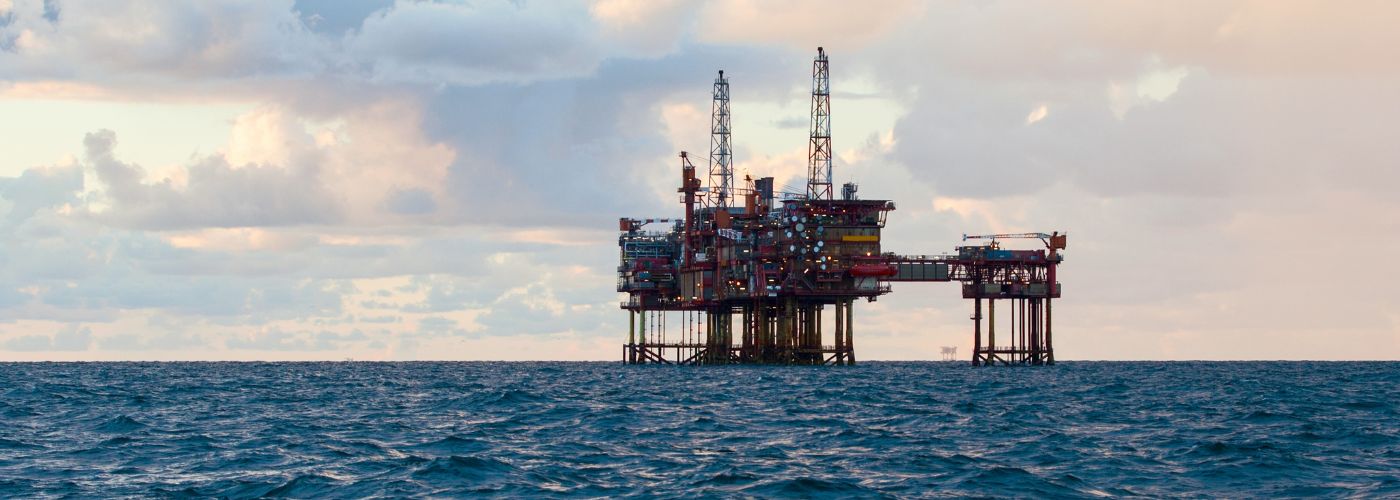
For illustration only
What the Federal Court’s Leave Decision Means — and What Comes Next
The dispute between Petroliam Nasional Berhad (Petronas) and the Sarawak State Government over control of the state’s oil and gas resources is one of the most significant constitutional challenges in modern Malaysia. The litigation, however, remains some way from resolution. The Federal Court has granted Petronas leave to challenge the constitutional validity of several Sarawak state laws, and the substantive questions remain to be argued.
That procedural ruling, delivered on 16 March 2026, does not decide who owns Sarawak’s petroleum. It does not resolve the deeper question of how far a state legislature can reach when it passes laws affecting a national industry. But it opens the door to a full hearing — and the arguments that will be aired there could provide long‑awaited clarity on the division of regulatory authority over natural resources between the Federation and the Borneo states.
The Background
The current proceedings are the latest chapter in a decades-long dispute over petroleum rights in Sarawak. During the 1969 national emergency, section 4 (2) of the Emergency (Essential Powers) Ordinance No. 7 of 1969 defined Sarawak’s territorial waters, for the purposes of federal petroleum and land laws, as not exceeding three nautical miles. Although the three emergency proclamations — including the 1969 Proclamation — were revoked in 2011, section 3(3) of the Territorial Sea Act 2012 re‑imposed that limit.
Subsequent efforts to resolve the conflict, a 2018 suit by Petronas in the Federal Court that was dismissed for want of jurisdiction, a 2019 sales tax dispute that saw the High Court uphold Sarawak’s authority to impose the levy — a ruling that stood after the parties withdrew their appeals — and a 2024 action by Petros against Petronas over a disputed bank guarantee, all left the fundamental constitutional questions untouched. A joint declaration between the Federal and Sarawak governments in May 2025 acknowledged the co‑existence of the Petroleum Development Act 1974 and Sarawak’s Distribution of Gas Ordinance 2016, but likewise left the core issues unresolved.
In January 2026, Petronas filed a motion in the Federal Court seeking leave to challenge the constitutional validity of several Sarawak state laws. The national oil company argued that the Sarawak State Legislature had exceeded its legislative competence by enacting laws that encroach on matters reserved for the Federal Parliament — specifically, the regulation of upstream petroleum operations and the control of offshore areas.
The laws under challenge include the Sarawak Distribution of Gas Ordinance 2016, the Environment (Reduction of Greenhouse Gas Emission) Ordinance 2023, the Sarawak Oil Mining Ordinance 1958, the Sarawak Land Code 1958, and the Sarawak Interpretation Ordinance 2005. Petronas contended that these laws, taken together, seek to extend Sarawak’s legislative reach over the continental shelf and into areas that are exclusively federal under the Petroleum Development Act 1974 (PDA 1974).
Sarawak opposed the leave application, arguing that the dispute is fundamentally between the Federation and the State, and that Petronas — a company, not a state entity — has no standing to bring the challenge. Sarawak also pointed to its own pending petition, which questions the constitutional validity of the PDA 1974, the Continental Shelf Act 1966, and the Petroleum Mining Act 1966.
The Federal Government, through the Attorney General’s Chambers, did not oppose Petronas’s leave application.
What the Federal Court Decided
Chief Judge of Malaya Datuk Seri Hashim Hamzah, sitting as a single judge, granted Petronas leave to commence proceedings. He applied the standard test for leave under Articles 4(3), 4(4), and 128(1) of the Federal Constitution: the applicant must show that leave is necessary and that there is an arguable case that is not frivolous.
Hashim found that Petronas had met that threshold. He noted that the impugned state laws appeared to have an impact on Petronas’s rights and obligations under the PDA 1974, and that the constitutional questions — including the validity of the Sarawak (Alteration of Boundaries) Order in Council 1954 and the scope of the state’s legislative competence — deserved a full hearing. Petronas was ordered to file its petition within 21 days.
The ruling is not a final decision on the merits. It simply means the court is satisfied that there are questions of sufficient constitutional importance to warrant a full hearing before a larger bench of the Federal Court.
What Remains to Be Decided
The core constitutional questions have not yet been argued, let alone answered. Among them:
- Did the Sarawak State Legislature have the constitutional competence to enact laws that regulate or affect upstream petroleum activities, including offshore?
- Is the Sarawak (Alteration of Boundaries) Order in Council 1954 still valid, and if so, does it give Sarawak jurisdiction over the continental shelf adjacent to its coast?
- Does the Petroleum Development Act 1974 grant Petronas exclusive ownership and regulatory control over all petroleum resources in Malaysia, including those in Sarawak, and was the PDA 1974 itself validly enacted as it applies to Sarawak?
The Sarawak Government has its own petition challenging the PDA 1974 and related federal statutes. The eventual judgment could provide long‑awaited clarity on the division of regulatory authority over natural resources between the Federation and Sarawak.
Since the Leave Decision
The litigation has continued to develop. In late May 2026, Petronas filed an amended petition seeking to clarify that it did not wish to consolidate its case with Sarawak’s — a shift from March, when both parties had indicated a joint hearing was possible. Meanwhile, the Registered Trustees of Sabah Action Body Advocating Rights (Sabar) applied to intervene in the Sarawak proceedings, seeking to raise similar constitutional questions affecting Sabah, including the validity of the Continental Shelf Act 1966 and the Petroleum Mining Act 1966 as they apply to that state. Petronas has objected to Sabar’s intervention. The Sarawak Government has also amended its petition, setting out its argument that the Petroleum Development Act 1974 was enacted without the request of the Sarawak Legislature required under Article 76(1)(c) of the Federal Constitution. On 8 June 2026, case management was held before Federal Court deputy registrar Azaraorni Abd Rahman to set a hearing date for both petitions.
Recent Developments
28 August 2026 — the Federal Court dismissed Sabar’s application to intervene in the Sarawak proceedings. A three-member bench chaired by Justice Nordin Hassan ruled that Sabar had no legal interest in the case, and that any decision on Sarawak’s petition would not affect Sabar’s separate High Court suit. The court also noted that Sabar had admitted it was not representing the Sabah government. No order was made on costs. The decision narrows the scope of the Federal Court proceedings, leaving the main contest between Sarawak, the Federal Government, and Petronas to proceed without Sabar’s participation.
24 September 2026 — At a case management hearing before Justice Rhodzariah Bujang, both Petronas and the Sarawak Government confirmed that they want their petitions heard separately. What changed was Sarawak’s position: the state, which had initially raised no objection to a joint hearing, now wants its petition heard first. Petronas’s position was unchanged — it had sought a separate hearing since May 2026. The court tentatively fixed one week from 25 January 2027 for the hearing, and set 1 October 2026 for further case management to resolve the sequence and other preliminary matters. Sarawak also wants a preliminary issue determined before the substantive arguments: the legitimacy of the Sarawak (Alteration of Boundaries) Order in Council 1954.
Practical Takeaways
- For businesses in the petroleum sector: The regulatory framework remains unsettled. Until the Federal Court delivers a final judgment, both federal and state laws claim to apply. Compliance with one regulatory system may not satisfy the other. Legal advice is essential.
- For state governments: The case will test the limits of state legislative power, particularly over natural resources. The outcome will affect not only Sarawak but also Sabah and any other state that seeks to regulate resource-based industries.
- For constitutional lawyers and legal observers: This is likely to be the most important federalism case since the formation of Malaysia. The arguments will involve historical documents, the Malaysia Agreement 1963, and the constitutional division of powers. It will generate a substantial body of jurisprudence.
A Closing Thought
The Federal Court has opened the door to a constitutional contest that has been brewing for years. The substantive questions — about territory, resources, and the bargains struck at Malaysia’s founding — remain untouched. When they are finally argued, the court will not simply be deciding who regulates gas distribution or carbon storage. It will be deciding the balance of legislative power between the Federation and the Borneo states over natural resources — and the legal effect those foundational bargains carry within today’s constitutional order.
For now, the only certainty is that such clarity remains some distance away. But the process has begun, and everyone with a stake in the outcome should be paying close attention.