Important Note: This article is for general information and educational purposes only — not legal advice. It draws on the court decision as reported by Free Malaysia Today, The Sun, and The Star.
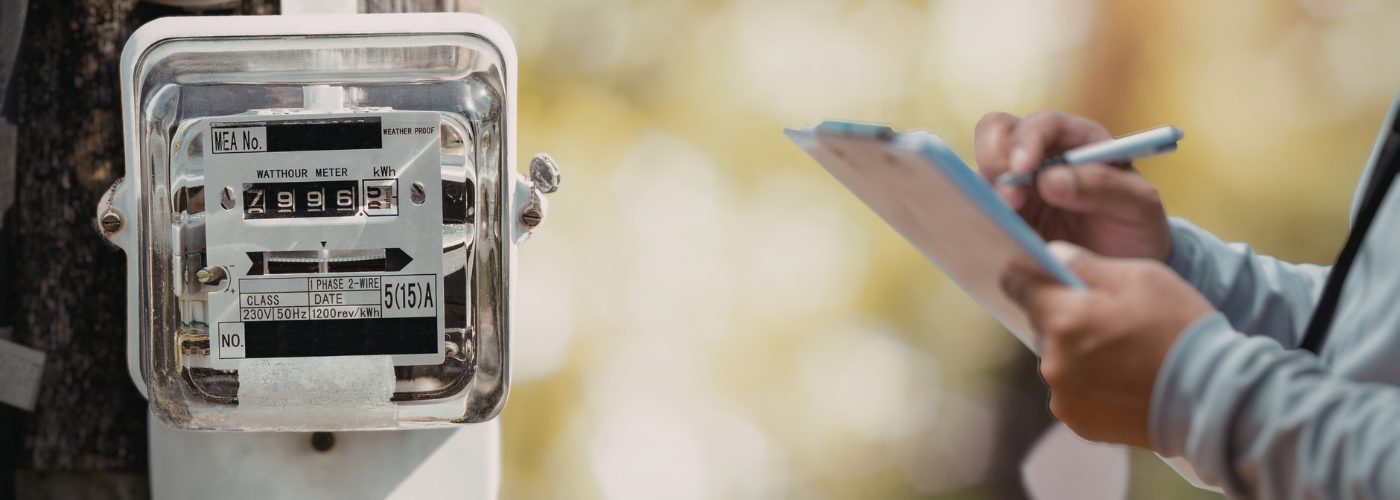
For illustration only
What a RM476,000 Award Means for Businesses That Tamper with Electricity Meters
When a business tampers with its electricity meter, it is not simply stealing power — it is building a debt that will eventually come due. Top Status KD Sdn Bhd, a wood‑based company, learned that lesson the hard way when Tenaga Nasional Berhad (TNB) took it to court and won a judgment of RM476,000 for electricity consumed but never paid for.
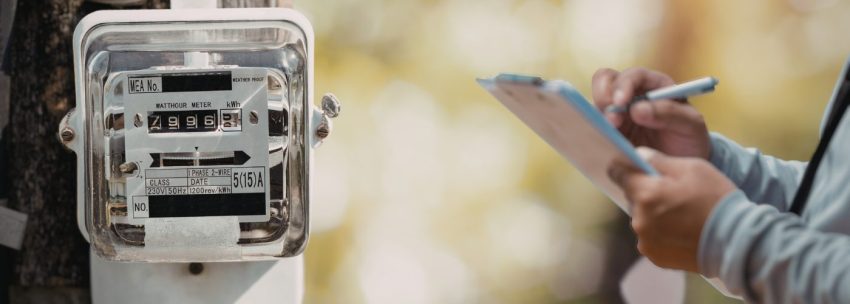
The tampering came to light on 30 October 2020, when TNB staff inspecting the meter installation at the company’s premises in Port Klang found clear evidence of it. The terminal seal was missing, and the inspectors discovered an additional circuit that allowed remote control of the red and yellow phase voltage circuits via wiring between the CT coil and fuse. In simple terms, the meter had been rigged so that the company could manipulate how much electricity it appeared to be using — and therefore how much it paid for.
Following the discovery, TNB calculated its revenue loss and operational costs at RM476,124.65 and claimed that sum from Top Status. The company denied any knowledge of the tampering, insisting that any shortfall in electricity usage readings was due to reduced production activity during the period.
The dispute therefore came down to which account the Klang Sessions Court accepted. The law that governed that assessment is clear.
The governing law is set out in the Electricity Supply Act 1990. Section 37(3)(d) and (e) make it an offence to alter the index of a meter or to prevent a meter from duly recording the consumption of electricity — precisely what TNB’s inspectors found at the premises. Section 38(3) then allows a licensee such as TNB to require the consumer to pay for the resulting loss of revenue and any associated expenses. Under Section 38(4), a written statement by a TNB employee, certified by the licensee and specifying the amount of the loss and the person liable, shall be prima facie evidence of the payment to be made. This means that once TNB produces its certified statement of loss, the burden effectively shifts to the consumer to challenge that evidence. If the consumer cannot raise a credible doubt about the calculation, the amount stated is recoverable through civil proceedings under Section 38(5).
The Court’s Decision
In his grounds of judgment dated 18 March 2026, Sessions Court Judge Mohd Sabri Ismail found that TNB had presented credible evidence of tampering. Top Status argued that the sharp drop in electricity usage was due to a factory shutdown during the COVID‑19 Movement Control Order, but the judge rejected this explanation. He noted that the claimed loss period began on 31 December 2019, whereas the first MCO only started on 18 March 2020. As the judge observed, the company “failed to explain the real cause of the sharp drop in electricity usage for the disputed period from 31 December 2019 to 31 October 2020.”
The court further found that Top Status had failed to show any obvious error in TNB’s claim. It also failed to prove the existence of any manifest error in TNB’s claim. The testimony of its own witness did not raise any doubt about the calculation method or the accuracy of the statement. The judge described the company’s defence as “a bare denial” that “did not discharge the burden of proof to rebut TNB’s claim.” With no credible challenge to TNB’s evidence, the court ordered it to pay RM476,124.65 — the value of the unmetered electricity.
Practical Takeaways
- Meter tampering is a false economy. Whatever is saved in the short term will be dwarfed by back‑billing and legal expenses.
- The registered consumer bears responsibility for the meter on their premises. Whether or not they personally tampered with it, the legal presumption runs against the account holder.
- TNB’s estimate of the loss will be accepted unless the business produces solid evidence to challenge it. A bare denial will not suffice.
- Once tampering is discovered, settling early may well be cheaper than litigating. The cost of a civil claim only adds to the eventual bill.
For any company tempted to interfere with its electricity meter, the equation is simple: the short‑term savings are never worth the long‑term liability.